|
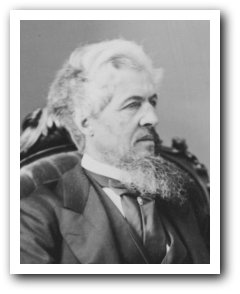
Christopher
Dunkin was defeated in his first attempt to
represent Drummond in the colonial legislative
assembly in 1844. His second attempt at politics
was more successful, although his tenure was
brief: he was elected to the assembly in 1858 to
represent Drummond-Arthabaska, but he lost the
seat in 1861. Finally, the resilient Dunkin was
elected to represent Brome, a seat he held from
1862 until Confederation.
Dunkin contributed to the crisis in government
that eventually led to Canadian Confederation
when he refused to support the government of
fellow Conservatives John A. Macdonald and
Etienne-Pascal Taché in 1864. The loss of his
vote denied their ministry the majority it
needed to stay in power. The legislative
gridlock that resulted from the government´s
fall led to the desperate coalition of parties
that eventually achieved Confederation.
Ironically, Dunkin, who represented the English
Protestant minority in Quebec´s Eastern
Townships, opposed Confederation during the
parliamentary debates of 1865. He predicted that
the new country would have too many regional,
racial, religious and political differences to
develop as a nation.
In 1867, Dunkin was elected to both the House of
Commons and the Quebec national assembly for
Brome. He turned down a Quebec cabinet position
because premier-designate Joseph Edouard Cauchon
would not introduce and support a bill giving
Protestants their own schools. Pierre Joseph
Olivier Chauveau, a former associate of
Dunkin´s, was more willing to address
Protestants´ needs. Chauveau became premier and
formed Quebec´s first provincial government.
Dunkin was his treasurer from 1867 to 1869 and
was so influential that people nicknamed it the
"Chauveau-Dunkin" government.
In 1869, Prime Minister Macdonald rearranged his
cabinet and needed a new English-speaking Quebec
representative. When his first choice, John
Henry Pope, refused -- only to accept two years
later -- Macdonald appointed Dunkin minister of
agriculture. Dunkin, however, was in poor health
and losing political support. In 1871, Dunkin
resigned and left politics to become a puisne
judge of the Superior Court of Quebec until his
death in 1881.
Departmental Developments
Dunkin
owned a 316-acre industrial-sized farm in
Knowlton on Lac Brome and was no stranger to
agricultural issues. Like Chapais before him,
most of his concerns at the Department of
Agriculture had little to do with what would
appear to be important to agricultural policy
today. Annual reports of the period dwell on
immigration issues and the collection of
statistics.
Accomplishments as Minister
The
only agricultural concern Dunkin appears to have
faced was a brief scare over a resurgence of the
cattle plague that caused Chapais to ban
American horned cattle imports for several weeks
in 1868. In 1870, after an investigation by
Ontario government officials, Dunkin concluded
there was no cause for alarm.
Worth Noting
Dunkin´s
political legacy may have more to do with his
role as Quebec´s minister of finance than his
achievements as Canada´s minister of
agriculture.
Dunkin started a tradition in Quebec politics
that lasted over a century: appointing an
English-speaking member of the assembly as
Quebec´s treasurer.
Dunkin
might have been ahead of his time on
federal-provincial issues, strongly advocating
the equality of federal and provincial
governments and espousing what biographer Pierre
Corbeil calls a "true Quebecker´s view of
politics and the Constitution." Dunkin believed
the provincial government had to take an active
role in Quebec´s economic development, even
though provinces depended on Ottawa for revenue.
|