| |
| |
|
The Duncans
of Jordanstone & Drumfork |
|
by John A. Duncan of
Sketraw, FSA Scot. |
|
 |
|
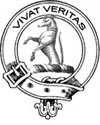
Crest Badge Duncan of Jordanstone |
|
|
The rise of the Duncan
family, the eventual owners of Jordanstone, began in the mid 19th century
when two brothers left Alyth, Angus, to seek their fortunes overseas. James
and David were the sons of James Duncan (1790-1843) manufacturer and
merchant at The Brae, Alyth, and Margery Crocket m.1816, daughter of George
Crockat. After their education at Dundee High School, the brothers set out
for Bolivia, South America, where they became extremely prosperous trading
up and down the Pacific Coast.
The younger brother, David Duncan (1831-1886) married Catherine Williamson
of Anstruther, Fife in 1856. Their first child, James Archibald, was born in
1858 whilst they were living in Valparaiso, Chile. Shortly afterwards they
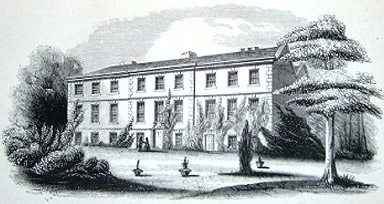
moved back to Britain, settling at Gayton Hall in Cheshire. From there David
could oversee operations at the head offices of their trading company
Duncan, Fox & Co. Based at 31 James Street, Liverpool, with subsidiary
offices in towns across Chile and Peru. He was later also a director of
Royal Insurance, Justice of the Peace for Cheshire and became a progressive
Liberal M.P. for Barrow in Furness in 1885. |
|
David’s
elder brother James Duncan (1825-1909) used his newfound wealth to buy the
estates of Drumfork and the Forest of Alyth, north of his childhood home
where he lived with his sister Eliza (1836-1912) upon his return to Britain.
When the opportunity to buy Jordanstone Estate, then owned by Sir John
Knight arose in 1892, James instructed solicitors in Dundee to buy it, no
matter what the cost. The solicitors didn't believe he could complete the
deal and according to Lady Beatrice Duncan, (wife of Sir James Duncan a
great nephew of James) “he threw the money on to the floor and told them
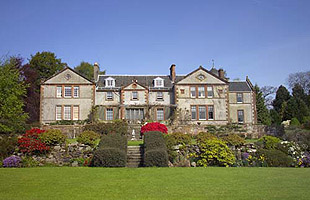
to pick it up”. After building a new east wing at Jordanstone House it
became his principle residence. |
| |
 |
| |
Gayton Hall, The
Wirral, Cheshire |
|
|
James, later in life became
a benevolent patron of the arts and in 1908 the year before his death; he
commissioned the impressive stained glass window at Alyth Parish Church,
designed by Henry Holiday of London which depicts ‘The Man of Sorrows in
Anticipation and Realisation’. It was in his will however that his greatest
legacy was laid out, as he set aside the sum of £60,000 to found a school of
industrial Art. |
 |
|
|
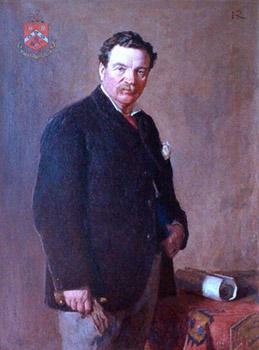
James
Duncan of Jordanstown |
|
|
by Sir
George Reid, c.1890 |
|
|
“To be applied by my
trustees in founding a Dundee School of Industrial Art to be named and known
in all time to come as the Duncan of Jordanstone Art School. The Chief
object of the school shall be the teaching of all that relates to textile
manufacturing and design…in the ornamentation and decoration of buildings
and the designing of furniture, art metalwork, lithographic drawing, wood
carving art pottery and the like.”
There was also the unusual
stipulation that, attached to the art school, there should be a womans
institute in which instruction could be given in such subjects as household
thrift and management, cookery, laundrywork, dresscutting and needlework,
insofar as the teaching of such subjects has not otherwise been efficiently
provided for in Dundee. James Duncan had very progressive ideas about
education!
At that time art was taught
within the joint Dundee Technical Institute& School of Art, and
complications arising from this meant that it was not until the 1930s that
plans were finalised for the new College on Perth Road. The Second World War
then caused further delays and Duncan of Jordanstone College of Art was not
officially opened until 1953 and continues today as a faculty of the
University of Dundee, following a merger in 1994. |
|
James died a bachelor and
Jordanstone estate passed to the eldest son of his brother David, James
Archibald Duncan (1858-1911) who was at that time living in Gayton Hall,
Cheshire and in London. Educated at Amersham Hall and Cambridge, he was
called to the Bar in 1883, where he practiced as a barrister of the inner
temple on the northern circuit. Like his father, James Archibald felt a
calling to politics and was the liberal M.P. for Barrow in Furness from 1890
to 1892. Also unmarried he died not long after his uncle in 1911. |
|
Jordanstone then passed to
the younger brother Alexander Lawson Duncan (1859-1924), similarly educated
at Amersham House and Cambridge and was a partner in Duncan, Fox & Co and
J.P. for East Denbighshire. A noted breeder of Clumber Spaniels and
Retrievers, his other passions included shooting and motoring. He married
Margaret Lawson of Burnturk in 1898 and they had a single child James
Alexander Lawson in 1899.
Sir James Alexander Lawson Duncan was educated at Marlborough. He joined the
Scots Guards on turning 18 and saw action in the trenches of the First World
War before moving into Germany and later the Baltic States, reaching the
rank of 2nd Lieutenant in 1920. He then left the army and married Adrienne
St. Quinton and moved to Northern Rhodesia where they
farmed some 17,000 acres. |
| |
 |
| |
Jordanstone House,
Perth & Angus |
|
|
On coming into his father’s
inheritance in 1924, James and his wife moved back to Britain, settling in
London and followed his uncle and grandfather into politics. James was a
member of the London County Council from 1925 to 1928 and the Conservative
MP for North Kensington from 1931. He was a noted politician and held the
posts of Parliamentary Secretary to the Board of Trade (1932-1937), the
Ministry of Transport (1937-1939) and the Ministry of supply (1939-1940).
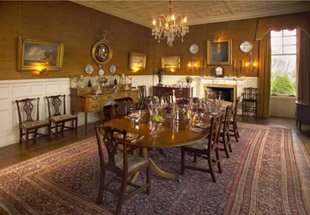
Jordanstone was a treasured country retreat from the Duncan's London address
at 39 Park Street, Mayfair and during this time they employed Sir Robert
Lorimer, one of the most eminent Scottish architects of his day to further
enlarge the house. |
 |
|
|
The Interior of
Jordanstone House |
|
|
On the
outbreak of the Second World War, James rejoined his old regiment the Scots
Guards and rose to the rank of Captain. After the war the Duncans left
London to settle in Jordanstone permanently. In 1950 he became the local MP
for South Angus & Kincardineshire, a post he held until his retirement in
1964. He was created a Baronet in 1957.
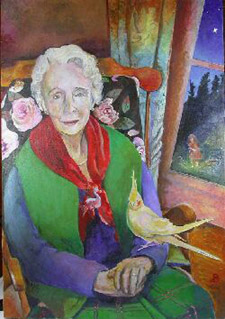
After the
death of his first wife Sir James remarried in 1966 to Lady Beatrice Mary
Moore Oliphant, herself a widow, born Beatrice Carroll (1910-2003) in
Ireland. Lady Duncan was an established actress in Ireland before the war
and was the original voice to ‘Larry the Lamb’ for the BBC after her move to
Britain. In an interview in the 1980’s with Richard Carr, she made mention
of her marriage to Sir James whom she had known for many years: |
| “I was sitting
in the castle (Ardblair) one evening and saw the lights of Jordanstone where
Sir James Duncan, was also sitting in his mansion house. What a waste of
electricity, I thought. So I rang Sir James up and suggested that we live
together to save money!” |
|
After Sir James’s death in
1974, Lady Duncan spent a great deal of her time involved with charity work
and the support of local actors, artists and musicians. She often opened up
the house and gardens of Jordanstone to raise funds for her numerous charity
interests. Including the Sir James Duncan Medal Fund, set up by Sir James in
1964 to honour individuals displaying conspicuous bravery in assisting
Police Officers.
In 1994 Lady Duncan received an Honorary Doctorate from Duncan of
Jordanstone College, the last person to be so honoured before the college
changed its name to Duncan of Jordanstone College of Art & Design and became
a faculty of Dundee University.
Lady Duncan died in December 2003, The last of the Duncans of Jordanstone.
© John
A. Duncan of Sketraw FSA Scot. |
| |
|
| |
Portrait of Lady Duncan
by Dianne |
|
| |
Acknowledgements: My thanks to
Marcus Dean, the now owner of Jordanstone House.
Richard Carr’s obituary to Lady Duncan University of Dundee Press Office.
Gavin Strang’s Article for Lyon & Turnbull Auctioneers, Edinburgh.
Portrait of James Duncan of Jordanston by Sir George Reid, c.1890, Image ©
University of Dundee Museum Services.
Scotland’s People Online Genealogical Database, New Register House
Edinburgh.
Court of the Lord Lyon, New Register House Edinburgh.
If you have further information or
images on the 'Duncans of Jordanstone' Please Contact
the Society |
|
|
|
